Mother’s Day for Neurodivergent Mothers: Forget the Hallmark Card, Drop the Shame, and Reclaim Your Nervous System, Joy, and Space
A neuroaffirming Mother’s Day guide for neurodivergent mothers, caregivers of neurodivergent children, and families navigating PDA, ADHD, autism, and burnout
Mother’s Day is often framed as a celebration of appreciation
But for many neurodivergent mothers and caregivers, it functions more like a visibility moment for something you already carry all year:
invisible labor, emotional tracking, sensory overload, and systemic overload disguised as “normal parenting.”
And then comes the unspoken expectation:
“You should feel more celebrated than this.”
If you don’t, shame often fills the gap.
So let’s name something clearly:
Mother’s Day is not a test of how well your family performs appreciation.
For many neurodivergent mothers, it is a mirror showing how much of your life has been built around managing everyone else’s regulation needs.
The myth of the “good mother” was never neurodivergent-friendly
Many mothers, especially late-identified ADHD and autistic mothers, were given a very specific cultural script:
Be patient without limits.
Be emotionally available without depletion.
Be organized without scaffolding.
Be grateful without pause.
Be soft, selfless, and socially effortless.
And if you can’t meet that standard? It becomes personal failure.
But in neuroaffirming reality, what we often see is this: That “ideal mother” was never a human standard.
It was a compliance-based expectation built for nervous systems that were never asked to process this much input, emotion, or executive demand.
So if you’re struggling, not with love, but with load, you are not misfiring: you are overextended in a system that doesn’t account for your nervous system.
Neurodivergent motherhood is not less love—it’s more load
In our work with families at Neuron and Rose Psychology, a consistent pattern shows up:
It is not a lack of care that causes burnout.
It is the volume of unseen roles mothers are holding at once:
emotional regulator
sensory buffer
executive function proxy
social interpreter
intergenerational pattern holder
household systems manager
And often, mothers are doing this while also being neurodivergent themselves.
So Mother’s Day doesn’t just bring celebration. It often brings exposure:
“This is how much I carry… and how invisible it still is.”
When celebration becomes a demand structure (especially for PDA kids)
For some neurodivergent children, particularly those with a PDA (Persistent Drive for Autonomy) profile, Mother’s Day can quietly become a hidden demand system dressed as affection.
Because suddenly:
love is scheduled
gratitude is requested
emotion is expected on cue
and participation becomes visible performance
And their nervous system responds not to love itself, but to the loss of autonomy embedded in the request.
So what looks like “non-participation” may actually be:
nervous system threat response
demand avoidance as regulation
or inability to perform emotional output on request
Not because they don’t care. But because care under pressure stops being accessible as care.
A neuroaffirming reframe for PDA dynamics
Instead of: “Why won’t they participate?”
Try: “What parts of this expectation are functioning as demands instead of connection?”
Because for PDA profiles, if it requires compliance, it often stops feeling like connection.
And when demand decreases:
proximity increases
trust becomes more available
connection becomes less defended against
Not guaranteed. But more possible.
Mother’s Day does NOT depend on your children’s participation
This is a central reframe: Your experience of Mother’s Day does not require your children to perform.
You are still a mother:
if there is no card
if there is no reaction
if there is no visible gratitude
if the day feels quiet or unmarked
Your role is not validated by output. And your worth is not measured through emotional performance from others.
Instead of performance, what if you reclaim the day?
For many neurodivergent mothers, especially those managing burnout, masking, and sensory overload, Mother’s Day can become something else entirely:
A rare permission structure.
A moment where you are allowed to stop managing everyone else’s experience of you.
Even briefly.
Even imperfectly.
Even alone.
Neurodivergent-friendly ways to celebrate yourself (no performance required)
This is not “self-care as optimization.”
This is nervous system expansion without demand.
🧠 Low-demand celebration (OR what i like to call, “cancelling the day”)
no hosting, planning, or coordinating
food without negotiation or cleanup guilt
staying in bed without justification
turning off notifications
letting the day be unstructured on purpose
🌿 Sensory + regulation-based joy
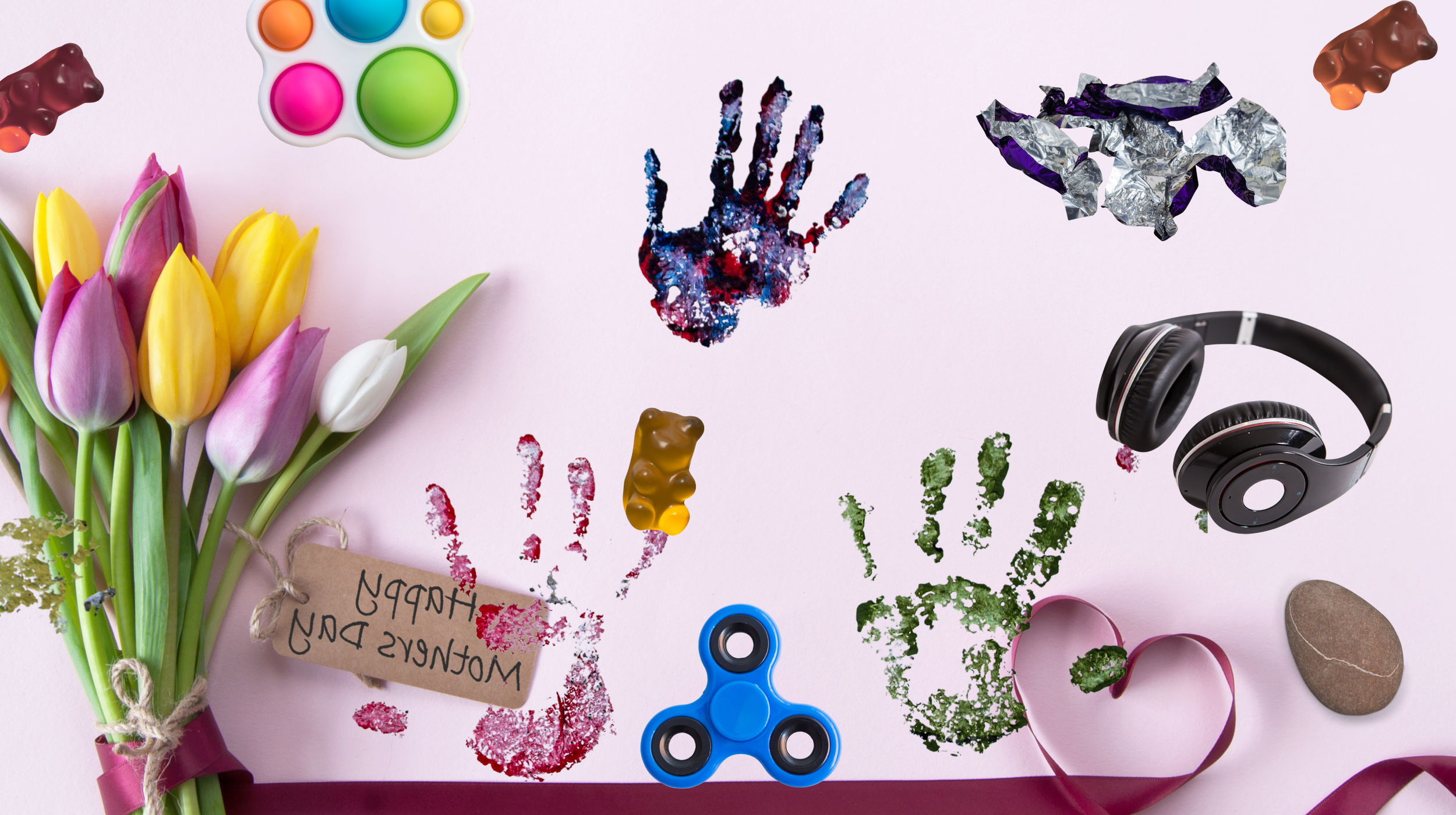
weighted blankets, textures, stimming, movement
music that matches internal state (not external expectations)
walking or sitting without purpose or productivity
environments that do not require emotional management
🧑🤝🧑 Adult connection without caregiving role
time with friends where you are not the organizer
conversations unrelated to logistics or parenting
being socially present without emotional labor distribution
🌙 A night away alone (not escape—recalibration)
A hotel room. A different bed. No one needing anything from you.
Not avoidance. Reduction of continuous demand exposure.
🧭 Reconnecting with pre-child identity (nervous system breadth)
Not nostalgia. Not regression. But expansion:
hobbies you didn’t monetize
music you used to lose time in
creative expression without outcome
environments where you weren’t tracking others’ needs
Sometimes joy is not new. Sometimes it is simply less narrowed.
Expansive joy is nervous system repair, not indulgence
Caregiving—especially neurodivergent caregiving—can slowly compress your internal world into:
responsiveness
efficiency
anticipation
self-erasure in micro-moments
So when you widen your life again, even briefly, it is not indulgence.
It is corrective regulation.
It tells your nervous system: “I exist beyond what I provide.”
And if your children don’t participate (or can’t)
In neurodivergent and PDA-informed families, Mother’s Day may not resemble cultural expectations.
Your child may:
resist structured emotional expression
avoid participation in scripted events
express care in indirect or delayed ways
or not engage with the holiday at all
And none of this determines the depth of your relationship. Because connection is not performance-based. It is built through safety, trust, and time—not compliance.
A deeper truth most mothers are never told: Mother’s Day is not actually asking you to receive more appreciation.
It is revealing how much of your life is organized around:
managing others
absorbing emotional load
and functioning as the system’s default regulator
So instead of asking: “How do I make this day feel better?”
You might ask: “What would my life feel like with less demand overall?”
That question is often where real change begins.
If this resonates, you are not alone in it.
If you are:
a neurodivergent mother
a late-identified ADHD or autistic parent
a caregiver navigating burnout and sensory overwhelm
or someone beginning to notice neurodivergence across your family system
There is often a deeper systems story underneath what looks like individual struggle.
At Neuron and Rose Psychology, we offer neuroaffirming psychological evaluations and therapy that look at the whole system—not just one child or one parent in isolation.
Because when one person is carrying too much, the solution is not more coping. It is clarity, language, and support that actually fits the system. Looking for support? We’d love to help. Reach out today to get started.
Closing reframe
This Mother’s Day, you do not need to perform gratitude, manage meaning, or extract validation.
You do not need your children to reflect your worth back to you in order for it to exist.
You are allowed to widen your life back toward yourself.
Not as a reward.
But as a return.

