
Let's Talk About Autistic Sex, Baby: What New Research Teaches Us About Sensory Processing and Intimacy
Many late-identified autistic adults spend years believing they have a low libido or just "aren't that into sex." But what if it isn't about desire at all? Emerging research explores how sensory processing, nervous system capacity, and autistic experiences shape intimacy. We unpack what the science says while affirming that asexuality is a valid, distinct identity—not something to explain away.

When High-Control Meets Neurodivergence
High-control groups can offer belonging and structure while also reinforcing shame, masking, and exclusion. In this neuroaffirming guest post, Michelle F. Moseley, LCMHC, explores why these environments can have a uniquely powerful impact on neurodivergent people and what healing can look like afterward.

What I Thought Was AuDHD Burnout Wasn't the Whole Story
What feels like AuDHD burnout may sometimes be only part of the story. This reflection explores how chronic illness, medical trauma, and neurodivergent adaptation can mask deeper health conditions like endometriosis, and why it matters to stay curious about what we normalize in our bodies and nervous systems.

Why Loss Can Feel Different When You're AuDHD
Grief for AuDHD individuals can extend beyond emotional loss, impacting routines, regulation, and daily support systems. Explore why relationship loss can feel like losing an entire ecosystem, not just a person, and how neurodivergent grief often shows up in unexpected ways.

Noah Kahan, OCD, and Why So Many People Are Finally Recognizing the Signs
When Noah Kahan shared his experience living with OCD, it sparked something powerful: recognition. Many people who had spent years calling their struggles anxiety, perfectionism, overthinking, or self-awareness began asking a different question: Could this be OCD? In this neuroaffirming guide, we explore what OCD actually is, why it often goes unrecognized in ADHD and autistic people, and how conversations like Noah Kahan's expand our understanding of what OCD can look like.

Autistic and Trans: are you both?
Dr. Kade Sharp offers a personal reflection on discovering autism later in life while navigating a trans and non-binary identity, masking, and neurodivergence. Exploring why autism is often missed in trans individuals and how self-understanding unfolds over time.

Why Do So Many Neurodivergent People Identify as LGBTQIA+? What Research Actually Shows
Neurodivergence and LGBTQIA+ identity often show meaningful overlap in research, but not in the way people assume. This post explores what studies actually show about autism, ADHD, queerness, masking, and identity discovery through a neuroaffirming lens.

I Mistook Heterosexuality for Safety and Being Easily Understood
In this deeply personal essay, one nonbinary, pansexual AuDHD writer explores the lifelong intersection of neurodivergence, masking, queerness, and survival. From undiagnosed Autism, ADHD, OCD, and PDA to navigating compulsory heterosexuality and the pressure to remain “understandable,” this story examines how identity can become buried beneath adaptation, performance, and the need for safety. Through reflections on late diagnosis, queer awakening, sensory overwhelm, and the emotional cost of being perceived, the piece offers a powerful look at neurodivergent identity, gender expansiveness, and the journey toward authentic self-recognition and self-acceptance.

Parenting as an AuDHD Parent While Raising Autistic ADHD Children
A neuroaffirming look at parenting with AUDHD while raising neurodivergent children. Explore nervous system regulation, burnout, repair, and capacity-based support instead of behavior-based parenting models.

Understanding PMDD & PME: When Hormonal Changes Significantly Impact Mood, Energy, and Focus
Learn about PMDD and PME, how hormonal changes impact mood, focus, and energy, and why ADHD and autistic individuals may experience stronger cyclical symptoms.

How to Have Better Conversations with Autistic People: It’s Not About “Fixing” Us
A neuroaffirming look at autism communication research showing how non-autistic people can improve conversations with autistic individuals. Learn the “grease vs blocks” framework and how small changes in listening, pacing, and clarity can create more inclusive communication.

Mother’s Day for Neurodivergent Mothers: Forget the Hallmark Card, Drop the Shame, and Reclaim Your Nervous System, Joy, and Space
Neuroaffirming Mother’s Day guide for neurodivergent mothers navigating ADHD, autism, PDA, burnout, and invisible labor—without shame or performance pressure.

Therapy That Actually Gets Autistic Adults (Imagine That): What This Study Found
A new pilot study shows that autism-adapted therapy and neurodivergent-led support improve anxiety, mood, social connection, and quality of life for autistic adults—when care is built around autistic experience, not against it.

Masking Isn’t a Superpower: What Camouflaging Really Costs Autistic Kids (and Teens)
Autism masking in children and teens can hide anxiety, depression, and burnout. Learn what camouflaging costs—and how to better support autistic youth.

Autistic Adults at Work: Job Satisfaction Depends on Workplace Climate, Not “Fixing” People
Autism and employment: job satisfaction depends on workplace climate, not fixing people. Learn how to build a neurodiversity-affirming workplace.
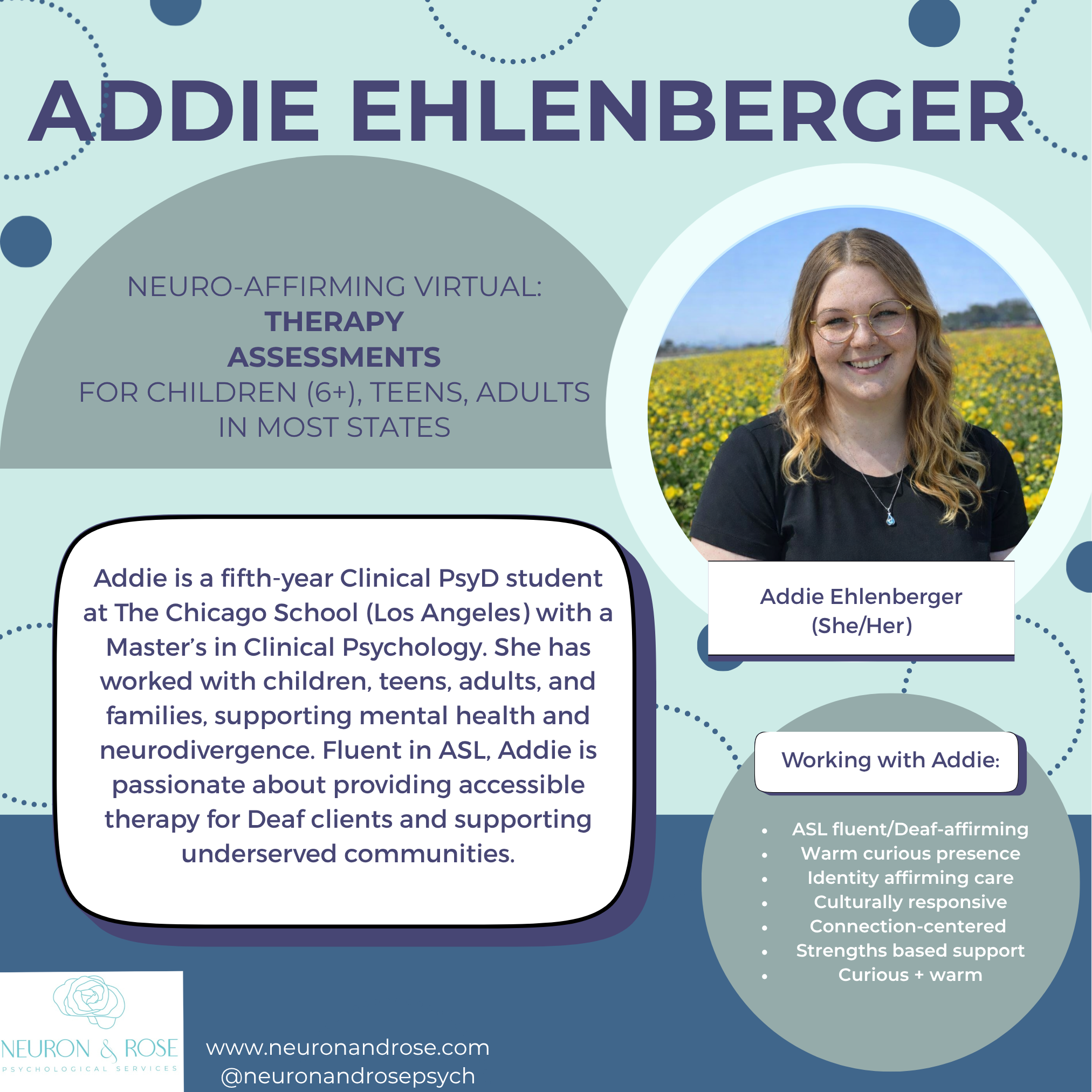
Meet the clinican: Addie Ehlenberger (She/her)
Explore neurodivergent-affirming therapy with an ASL-fluent clinician, Addie Ehlenberger. Start therapy or include her in your autism evaluation team today.

Seeing the Full Spectrum, Not Just the Prototype — Read Our Take on the Latest Autism Conversation.
Autism isn’t “too broad”—we’re finally seeing it clearly. Our take on the latest debate explores masking, late diagnosis, and why moving beyond the prototype matters.

Coping with Internalized Ableism: How Neurodivergent Adults Can Set Realistic Expectations
Struggling with internalized ableism as a neurodivergent adult? Learn how to recognize the sneaky “shoulds,” set realistic expectations, manage burnout, and reclaim your energy. Our neuroaffirming therapy and evaluation services help autistic, ADHD, and otherwise differently wired adults identify internalized ableism, build personalized coping strategies, and create realistic expectations that actually work.
📩 Ready to stop letting impossible expectations run your brain? Reach out today to explore therapy or start an evaluation with our neuroaffirming team.

When You Can Feel the Pattern: Intersectional Neurodivergent Strategies for Safety and Support
For neurodivergent, BIPOC and TGD/2SLGBTQIA+ individuals navigating political and global stress, learn strategies for building internal safety, setting boundaries, and finding supportive, neuroaffirming community.
negotiations with a nervous system: Life as a PDA Therapist
Pathological Demand Avoidance (PDA) isn’t just about behavior — it’s about how the nervous system responds to perceived demands. In “Negotiations with a Nervous System,” a PDA‑affirming therapist reflects on what it’s like to live with a nervous system that equates obligation with danger. They explore how nervous system threat responses shape everyday life, influence avoidance, and offer insights into a more compassionate, autonomy‑centered approach to therapy. This perspective reframes PDA as extreme sensitivity to autonomy loss rather than avoidance of effort, making it a powerful lens for neurodivergent‑affirming care.
