The Value of Community and Mutual Aid for AuDHDers: Why Connection Matters for Autistic ADHD Brains

If you're AuDHD (autistic and ADHD), chances are you've spent a lot of your life being told—directly or indirectly—that you're supposed to be more independent, more self-regulating, more resilient on your own. Struggle is often framed as a personal failure rather than a systems issue. Need help? You should try harder. Feel overwhelmed? You should manage your time better. Burned out? Maybe you just weren't built for the world.
This narrative is not only inaccurate—it's actively harmful.
For AuDHDers, community and mutual aid aren't "nice extras." They are protective factors. They are regulation tools. They are survival strategies. And they are often the difference between autistic burnout and sustainable living.
At Neuron and Rose Psychological Services, we view community support as a core component of neurodivergent-affirming care—not a replacement for therapy, but a necessary complement to it.
Why AuDHDers Are Especially Impacted by Isolation
AuDHDers sit at a unique intersection of needs that often contradict each other:
Autism can bring sensory sensitivity, need for predictability, and difficulty with implicit social rules, while ADHD can bring novelty-seeking, impulsivity, executive dysfunction, and inconsistent energy.
Individually, each neurotype already struggles in a society built for neurotypical brains. Together, they can amplify neurodivergent isolation.
Common Experiences of AuDHD Adults:
Repeated social rejection or misunderstanding
Masking to the point of exhaustion and autistic burnout
Difficulty maintaining relationships due to object permanence issues, time blindness, or sensory overload
Internalized shame from being told they're "too much" and "not enough" at the same time
When support systems are thin or conditional, isolation becomes chronic—and chronic isolation is a major risk factor for depression, anxiety, substance use, and autistic burnout in neurodivergent adults.
Community is not about constant socializing. It's about not having to do everything alone.
Mutual Aid vs. Traditional Support Models for Neurodivergent People
Mutual aid is often misunderstood as charity. It isn't.
Charity is hierarchical: someone gives, someone receives.
Mutual aid is relational: people support one another based on shared experience, shared vulnerability, and shared humanity.
For AuDHDers, this distinction matters deeply.
Traditional Support Systems Often:
Pathologize neurodivergent needs instead of contextualizing them
Reward "high-functioning" presentations and punish visible struggle
Expect consistency and productivity that many autistic ADHD people cannot sustain
Mutual Aid, By Contrast:
Normalizes fluctuating capacity and executive dysfunction
Allows people to give and receive support at different times
Values lived experience as expertise
Reduces shame by making needs visible and shared
What Neurodivergent Mutual Aid Looks Like:
Trading childcare, errands, or meal prep during burnout periods
Sharing scripts for difficult conversations or medical appointments
Body doubling for ADHD without judgment
Financial support pools for emergencies
Community resource-sharing when executive function collapses
None of this requires perfection. It requires honesty and trust.
Co-Regulation: Why Nervous Systems Regulate in Relationship
Nervous systems don't regulate in isolation. They regulate through co-regulation and connection.
For AuDHDers—many of whom have histories of relational trauma, bullying, or chronic misunderstanding—safe community can act as a corrective emotional experience.
What Safe Community Provides:
Being believed
Being accommodated without having to beg
Being allowed to show up dysregulated without being punished for it
Research consistently shows that social support buffers stress and reduces the impact of trauma. For neurodivergent people, this buffering effect can be even more pronounced, because daily life already demands so much sensory and cognitive adaptation.
Community Provides:
Co-regulation when self-regulation is inaccessible
Reality-checking when internalized ableism flares up
Modeling of alternative ways to live outside neurotypical norms
This is not weakness. This is neuroscience.
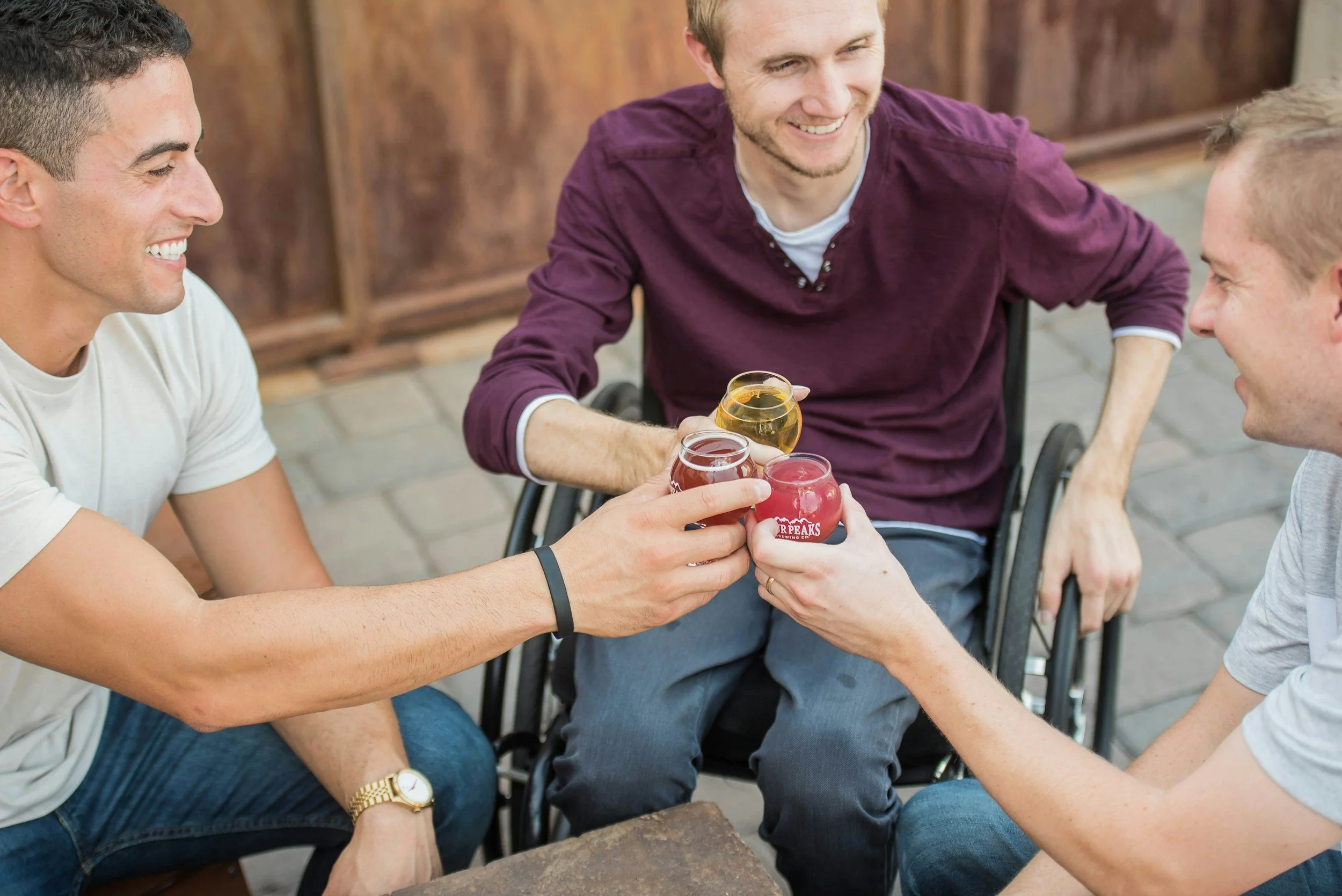
Community as Resistance to Ableism and Neurodivergent Discrimination
Ableism thrives on isolation.
When neurodivergent people are separated from one another, it becomes easier to convince them that their struggles are personal defects rather than predictable outcomes of inaccessible systems.
Community disrupts that narrative.
Hearing "me too" instead of "try harder" can radically shift self-concept and reduce internalized ableism.
Mutual Aid Networks Share:
Information about neurodivergent-affirming therapists and providers
Workplace accommodations that actually help autistic and ADHD employees
Guidance for navigating disability benefits and support systems
Warnings about harmful or outdated autism and ADHD treatments
In this way, community becomes a form of collective care—and collective care is inherently political, whether or not it's labeled that way.
Neurodivergent-Affirming Therapy Can Support Community—Not Replace It
Therapy is valuable. We believe deeply in its power. But therapy was never meant to replace human connection.
At Neuron and Rose, We Help Clients:
Process shame around needing support
Identify what safe neurodivergent community looks like for them
Unlearn hyper-independence rooted in trauma or ableism
Build boundaries that make mutual aid sustainable rather than draining
Therapy can help untangle relational wounds so that community becomes accessible again—but healing happens between sessions, in real-world relationships.
If therapy is the map, community is the terrain.
Building Neurodivergent Community When You're Burned Out
A common concern we hear: "I know community matters, but I don't have the capacity to build it."
That makes sense.
Autistic burnout narrows the world. Executive dysfunction makes initiation hard. Social anxiety adds another barrier.
Community-Building Can Start Small:
One person you can text without masking
One online neurodivergent space where your needs don't need explaining
One mutual exchange that reduces your load, even slightly
You don't have to be your best self to be worthy of connection.
Final Thoughts: Community as Essential Infrastructure for AuDHD Adults
For AuDHDers, community and mutual aid are not optional extras—they are essential infrastructure for neurodivergent wellbeing.
They:
Reduce autistic burnout and prevent ADHD overwhelm
Challenge internalized ableism
Remind you that your nervous system makes sense in the right context
You were never meant to do this alone.
Neuron and Rose Psychological Services: Neurodivergent-Affirming Support
If you're AuDHD and struggling with burnout, isolation, or shame around needing support, Neuron and Rose Psychological Services offers neurodivergent-affirming assessments and therapy designed with your nervous system in mind.
We can help you understand your autistic and ADHD needs, unlearn harmful narratives, and build a life that includes both support and autonomy.
Ready to Connect?
Contact us today to learn more about our neuroaffirming approach to AuDHD support.
This blog is for educational purposes only and is not a substitute for mental health treatment. If you are experiencing acute distress, please seek immediate professional support.

