Love Beyond Romance: A Valentine's Reality Check for AUDHD Adults

February is loud about one kind of love.
Hearts. Roses. Teddy bears holding tiny satin pillows that say "Be Mine." A narrow, glittery narrative that says love looks romantic, dyadic, heteronormative, and easy—and if you don't have that specific configuration, you're somehow missing the entire point of existence.
For many neurodivergent people, especially AUDHD folks, this framing can feel alienating at best and like a targeted emotional assault at worst. Our relationships don't always follow the tidy scripts written by greeting card companies and rom-com screenwriters. Our nervous systems, histories, identities, and capacities shape how we give and receive care in ways that don't fit neatly into a heart-shaped box. And many of us have learned—sometimes the hard way, after trying to force ourselves into shapes that were never meant for us—that romantic love is not the only love that sustains us.
Plot twist: it's not even always the most important love.
This February, let's widen the lens. Let's talk about the kinds of love that are worth celebrating just as loudly—arguably more loudly—than whatever's happening at overpriced restaurants on February 14th: love for yourself, love for your community, and love for the people who show up, whether they share your DNA or just your memes.
Love for Yourself (Yes, Even If That's Extremely Complicated)
Self-love is often marketed as bubble baths, jade rollers, and affirming yourself in the mirror like a slightly unhinged motivational speaker. For AUDHD adults, self-love is usually much less aesthetic—and much more radical.
Self-love might look like:
Believing your exhaustion is real (even when no one else does)
Accommodating your sensory needs without performing a guilt-ridden apology tour
Letting go of the idea that you need to be "less" to be lovable (less loud, less intense, less you)
Choosing rest over productivity (gasp, the audacity)
Stopping the endless internal negotiation about whether your needs are "too much" (spoiler: they're not)
Many AUDHD people grow up receiving constant feedback that they are either too much (too loud, too intense, too emotional, too enthusiastic about their special interests at dinner parties) or not enough (too inconsistent, too distracted, too sensitive, too unable to just "get over it"). Over time, this erodes self-trust like water on stone—slowly, steadily, until you're not sure what's left.
So self-love, for an AUDHD nervous system, often begins with repair work that no one warned you about.
It's learning to listen inward instead of outsourcing your worth to people who don't understand how your brain works. It's noticing when you're pushing past your limits to meet external expectations that were designed for a completely different operating system. It's practicing compassion when executive functioning drops off a cliff or burnout hits like a freight train you saw coming but couldn't stop.
Self-love isn't about perfection, green smoothies, or finally becoming the person you "should" be. It's about relationship—with yourself, as you actually are, right now, dishes undone and all.
Community Love: The Kind That Actually Keeps Us Alive
If there is one form of love that deserves a spotlight in February—hell, every month—it's community.
Neurodivergent people have always survived through each other. This is not a platitude. This is historical fact.
Community love is the friend who doesn't need you to explain why you're canceling for the third time this month. The group chat where no one is offended by parallel play and everyone understands that "I'm here but not talking" is a valid form of presence. The mutual aid spreadsheet. The shared memes that say, "Oh—you too? I thought I was the only one losing my mind."
For AUDHD folks, community often provides what systems fundamentally do not:
Validation without interrogation (no one demanding you prove your struggles are "real")
Support without moralizing (no lectures about trying harder or thinking more positively)
Belonging without performance (you don't have to earn your spot by being useful or entertaining)
Community love is especially powerful because it is decentralized. No single person has to meet all your needs, which is good because that's an impossible ask. Care is shared, flexible, and resilient. When one person doesn't have capacity, someone else might. When you can't show up, the web holds.
This matters deeply for neurodivergent nervous systems that have been told their entire lives that they're "too much" for any one person to handle.
Many AUDHD adults have experienced relational trauma—bullying, exclusion, being chronically misunderstood, being valued only for productivity or usefulness, being dropped the second they couldn't perform. Community offers a corrective experience: being wanted for who you are, not what you provide or how well you mask.
And community love doesn't have to be big or Instagram-worthy.
It can be one other neurodivergent friend who gets it. A support group that meets online because leaving the house is a whole thing. An online space that feels safer than the world outside your door. Love multiplies when it's shared—it doesn't divide.
Love as Mutual Aid, Not Martyrdom
AUDHD folks are often deeply attuned to injustice and suffering. We feel things. This can lead to fierce, beautiful care—and also catastrophic burnout that sneaks up on you like a plot twist you should have seen coming.
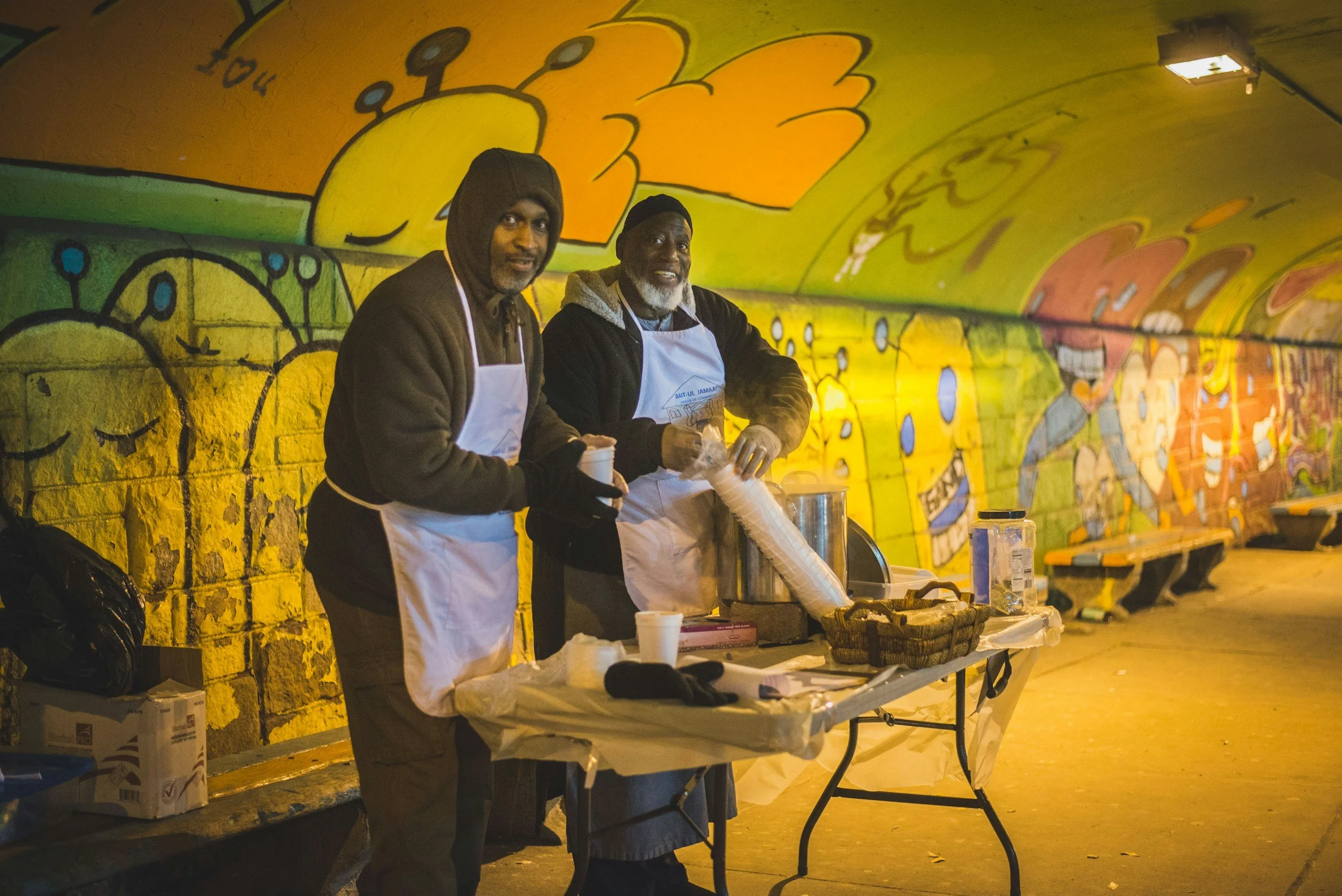
Community love is not about self-sacrifice until you collapse in a heap of noble exhaustion.
Healthy community love includes:
Reciprocity (even if it's asymmetrical—different people have different capacities, and that's okay)
Clear boundaries (not as punishment, but as sustainability)
Permission to rest (without guilt, without explaining yourself to death)
Flexibility around capacity (because some weeks you have it and some weeks you absolutely do not)
You are not required to harm yourself to prove you care. Read that again if you need to.
Love that demands burnout is not love—it's extraction with better branding.
Celebrating community in February means honoring sustainable care. It means recognizing that sometimes the most loving thing you can do is say, "I don't have capacity right now," and trust that the community will hold without you for a bit. Because that's what community means.
Family Love: Biological, Chosen, or Both (And It's Complicated Either Way)
For neurodivergent people, family relationships can be tender, complicated, fractured, or some chaotic combination of all three depending on the day.
Some families adapt, learn, and grow alongside their neurodivergent members. Others remain unsafe, invalidating, or stuck in patterns that do harm even when they don't mean to. Many AUDHD adults build chosen families—networks of friends, mentors, community members, and internet strangers who provide the attunement, acceptance, and safety they didn't receive growing up.
Both forms of family count. Neither is "more real" than the other.
Love for family might look like:
Rewriting roles that never fit (no, you don't have to be the "easy" one or the family therapist)
Setting boundaries to preserve your nervous system (even if it disappoints people)
Staying connected in new ways that work for you (not the ways someone else thinks you "should")
Grieving what was never offered (and letting yourself be sad about it)
Celebrating the people who chose you back (and didn't make you audition for their love)
There is no moral requirement to romanticize family relationships that caused harm. You don't owe anyone a redemption arc.
Love can coexist with distance. Care can exist without access. These things are not contradictions—they're survival strategies.
Chosen family, in particular, is a testament to neurodivergent resilience. It says: I get to decide who is safe with me. I get to build the family I needed.
Expanding the Definition of Love (Because the Current One Is Boring)
AUDHD people often love intensely, creatively, and outside the conventional boxes that were never designed for us anyway.
Love might look like:
Sitting quietly together, parallel-playing in the same room, speaking only in memes
Sending infodumps as affection (if I send you a 47-part voice memo about my current hyperfixation, that means I love you)
Remembering small details about what regulates you (your safe foods, your texture preferences, the exact lighting you need)
Showing up consistently, not dramatically (reliability over grand gestures)
Advocating fiercely for one another when the world is being ableist garbage
None of this is lesser than romance. Not even a little bit.
In fact, these forms of love are often what sustain us when romance falters, ends, or is absent altogether—which, statistically, is most of the time for most people.
February doesn't belong exclusively to couples eating overpriced prix fixe menus. It belongs to anyone practicing care, connection, and the quiet courage of showing up for each other in a world that's increasingly hostile to vulnerability.
Making Space for All Kinds of Love (Even When February Feels Like A Personal Attack)
If this month brings grief, loneliness, comparison, or the feeling that you're somehow failing at being human because you're not participating in the cultural script—you're not broken.
You are living in a culture that overvalues one kind of relationship and systematically undervalues the rest.
If this resonates with you, contact us today to learn more about Neuron and Rose Psychological Services and schedule an assessment.

