Job interviews are a two-way street. Sure, employers are figuring out if you're a good fit for them. But you get to figure out if they're a good fit for you, too. (Wild concept, right?)
And let's be real: figuring out whether a workplace is actually neuroinclusive (and not just really good at saying they're inclusive) isn't always easy.
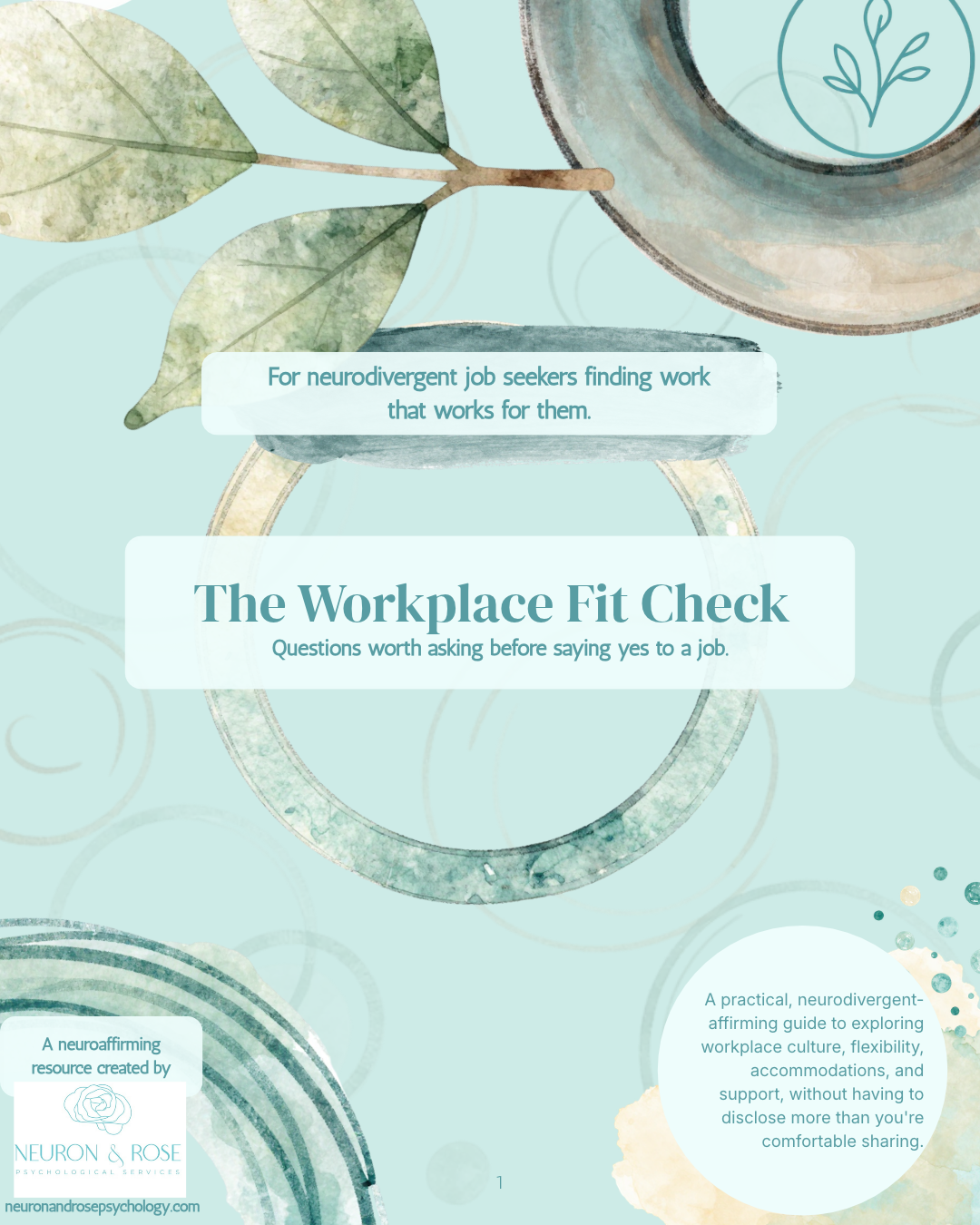
That's why we created our Neurodivergent-Friendly Workplace Questions Guide to help Autistic, ADHD, and other neurodivergent job seekers look beyond the job description and get a better sense of what working somewhere might actually be like.
What's Inside?
💬 Interview questions to explore workplace culture, communication, flexibility, accommodations, and inclusion.
🔐 Questions with and without self-disclosure, because whether you share your neurodivergence is entirely up to you.
✨ Helpful tips for choosing questions, navigating conversations, and paying attention to how employers respond.
And because we know that a giant list of questions can be its own kind of overwhelming, we've included a TL;DR section with key questions to help you get started.
Finding Work That Works for You
You don't need to ask every question, disclose a diagnosis, or turn your interview into a full-blown investigation. (Although, if a color-coded spreadsheet is involved, we get it. 👀)
Pick what matters to you, adapt the questions to your own voice, and remember: you're interviewing them, too.
The goal isn't just to land a job. It's to find a workplace where your needs are respected, your strengths are valued, and you don't have to constantly work against your own brain to succeed.
Because you deserve more than a workplace that simply tolerates neurodivergence. You deserve one that makes room for you. 💚
Explore the Guide
Whether you're preparing for an interview, considering a job offer, or just getting curious about what a more supportive workplace could look like, we hope this resource helps you ask questions, spot what matters, and make informed decisions.
Check out our Neurodivergent-Friendly Workplace Questions Guide Here